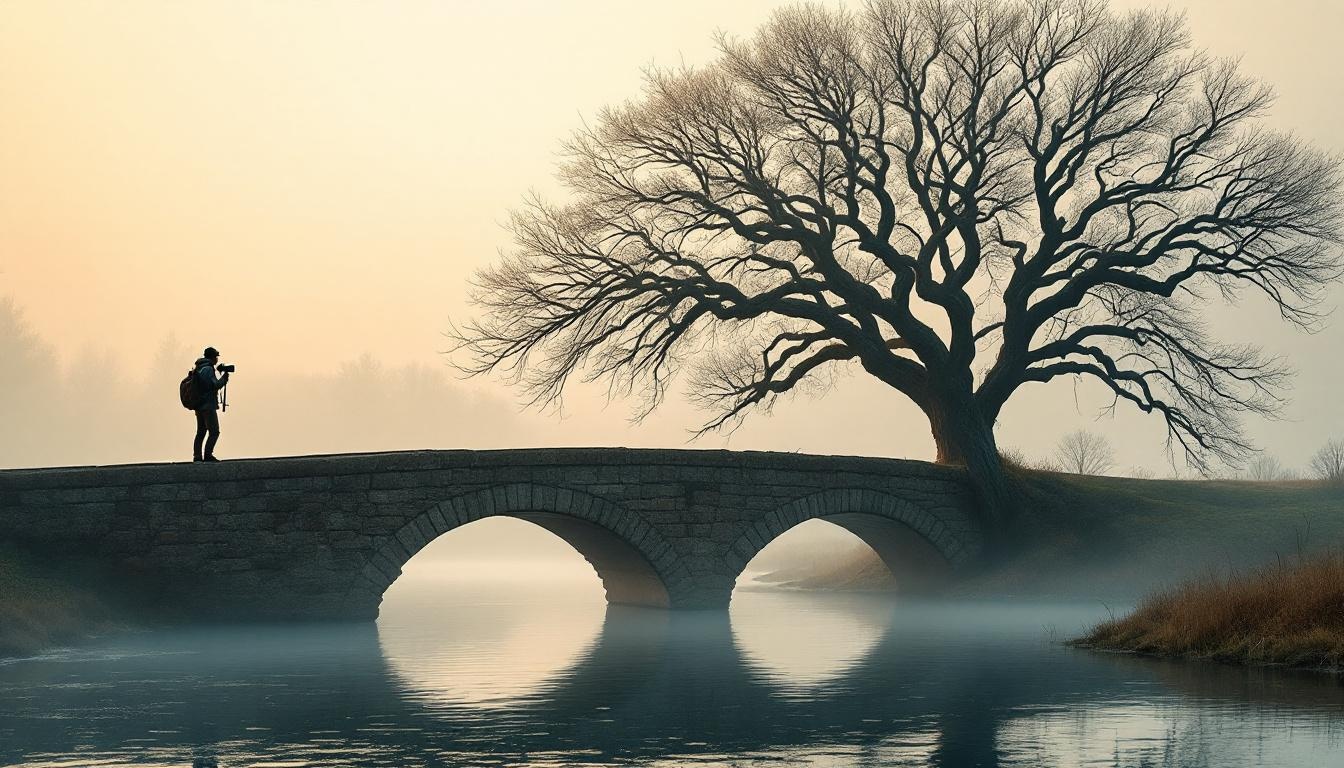
Perfect symmetry kills more potentially great photographs than blown highlights and soft focus combined. The obsession with centering subjects and matching left-to-right elements creates technically balanced images that viewers scroll past without a second glance. Real visual balance operates on weight distribution, not mirror matching, and understanding this distinction separates photographers who create compelling images from those who merely document scenes.
I’ve seen countless photographers become slaves to perfect symmetry, creating images that are technically balanced but emotionally dead. The most powerful photographs break the symmetry rules while maintaining visual equilibrium through strategic placement of contrasting elements.
The fundamental misconception about balance in photography stems from conflating mathematical symmetry with visual harmony. Symmetrical composition has its place, but asymmetrical balance creates the visual tension and natural flow that holds viewer attention. Most photographers discover this backwards: they master the rules of thirds and leading lines, then wonder why their images still feel static despite technically correct composition.
Visual Weight: The Physics of Photographic Attention
Visual weight determines how elements compete for attention within your frame, and size represents only one factor in this equation. A small, bright red barn in the corner of a landscape carries more visual weight than a large, muted gray mountain in the background. Color intensity, contrast levels, emotional significance, and position within the frame all contribute to an element’s gravitational pull on the viewer’s eye.
Visual weight isn’t about physical size at all. A tiny splash of red in a sea of green carries more compositional power than a massive neutral element. I teach my workshop students to think of their frame as a balance scale where color and contrast matter more than scale.
Understanding visual weight requires thinking like a cinematographer, not a mathematician. The human eye naturally seeks high-contrast areas first, then moves toward warm colors, then sharp details. A person’s face, regardless of its size in the frame, carries enormous visual weight due to evolutionary wiring that prioritizes human features. This is why a distant figure can balance an entire landscape: emotional significance trumps physical mass.
Texture and detail density also affect visual weight significantly. Areas with high detail density draw attention even when they occupy minimal frame space. This principle explains why photographers can balance large areas of negative space with small sections of intricate detail. A weathered wooden door with peeling paint can anchor an entire composition despite occupying less than ten percent of the frame.
When Symmetrical Balance Actually Works
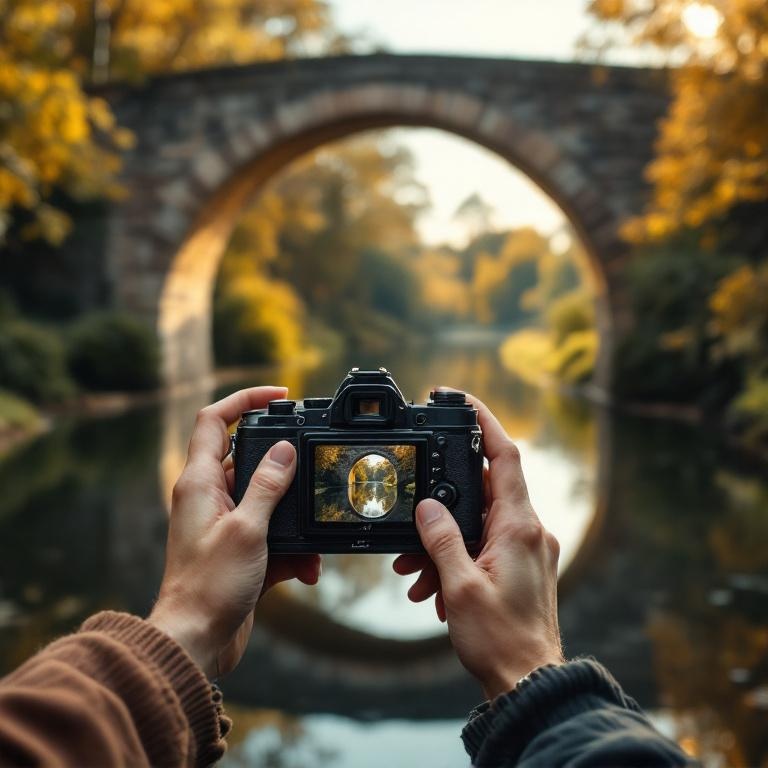
Symmetrical composition succeeds when the subject matter inherently possesses symmetrical qualities or when you want to convey stability, formality, or timeless calm. Architectural photography benefits from symmetrical balance because buildings themselves often feature symmetrical design elements. Gothic cathedrals, classical government buildings, and modern glass towers all contain internal symmetries that symmetrical composition reinforces rather than fights.
Reflection photography represents the most obvious application of symmetrical balance, but timing and conditions determine success. Golden hour timing varies significantly by geographic latitude: at 45 degrees north, optimal reflection conditions occur approximately 30 minutes after sunrise and before sunset, when light intensity matches between sky and water. At tropical latitudes near the equator, this window shrinks to roughly 15 minutes due to the sun’s steeper angle.
Portrait photography occasionally benefits from symmetrical composition, particularly for formal business headshots or classical artistic studies. However, even portraits often improve with subtle asymmetrical adjustments: positioning the subject slightly off-center, using asymmetrical lighting, or including environmental elements that create visual weight on one side.
The Power of Asymmetrical Balance
Asymmetrical balance creates visual interest by establishing and then resolving tension. Instead of matching elements on either side of the frame, asymmetrical composition uses visual weight distribution to create equilibrium. A large, low-contrast element on one side balances a small, high-contrast element on the other. This mimics natural visual flow patterns and creates compositions that feel organic rather than constructed.
Landscape photographers who master asymmetrical balance can create compelling images from seemingly mundane scenes. A vast sky occupies two-thirds of the frame but gets balanced by a single tree on the horizon line. The tree’s vertical orientation, detailed texture, and emotional significance as a living element provide sufficient visual weight to anchor the composition.
Street photography thrives on asymmetrical balance because urban environments rarely offer perfect symmetries. A bright storefront sign in the upper left corner balances a group of pedestrians in the lower right. The sign carries weight through color intensity and sharp geometric lines, while the people provide weight through emotional significance and detail density.
The key to successful asymmetrical balance lies in understanding counterbalance. Every element that adds visual weight to one area of the frame needs compensation elsewhere. This doesn’t require equal mass or identical elements. Instead, it requires equivalent visual pull. A setting sun (small but intensely bright) can balance an entire foreground of dark rocks (large but low contrast).
Breaking Balance: When Chaos Serves Purpose

Intentionally breaking balance creates specific emotional responses: unease, movement, or energy. This technique works when the subject matter calls for these emotions, but it fails when applied randomly or without clear artistic intent. Photographing a storm requires different balance considerations than capturing a peaceful garden scene.
Dynamic imbalance works particularly well for action photography, where the imbalance reinforces the sense of movement or energy in the scene. A runner positioned far to one side of the frame, with empty space ahead, creates forward momentum through imbalance. The viewer’s eye wants to complete the implied movement, creating engagement through visual tension.
However, breaking balance rules requires more skill than following them. Chaotic compositions only succeed when every element serves a purpose and the overall imbalance feels intentional rather than accidental. Museum photography collections demonstrate how master photographers like Henri Cartier-Bresson used intentional imbalance to create energy while maintaining overall compositional strength.
Context Determines Approach
Genre and context dictate which balance approach serves your image’s purpose. Wedding photography often benefits from asymmetrical balance that creates intimate, natural-feeling compositions. Corporate photography typically requires the stability and formality that symmetrical balance provides. Travel photography can use either approach depending on whether you want to emphasize a location’s grandeur (symmetrical) or its authentic character (asymmetrical).
Cultural considerations also influence balance choices. Western visual traditions often favor asymmetrical composition, while many Eastern artistic traditions emphasize symmetrical balance and central positioning. Understanding your audience’s visual expectations helps determine which approach will resonate most effectively.
Urban environments offer different balance opportunities depending on architectural styles and city planning. Cities with grid-based street layouts like New York provide abundant symmetrical composition opportunities through architectural repetition and street perspective. Cities with organic, historical development patterns like European city centers offer more asymmetrical balance opportunities through varied building heights, mixed architectural styles, and irregular street patterns.
The Practice Framework
Developing balance intuition requires systematic practice with immediate feedback. Start by identifying the three heaviest visual elements in your viewfinder before taking any shot. Ask where each element pulls your eye and whether that pull serves your intended composition. This analysis takes seconds once it becomes habitual but prevents the common mistake of focusing on your main subject while ignoring competing visual elements.
Practice deliberate imbalance by placing your subject far off-center and finding what balances it. This exercise develops your visual weight intuition faster than attempting perfect symmetry. Most photographers discover they can create compelling compositions with their subject occupying less than twenty percent of the frame once they understand counterbalancing.
Use your camera’s histogram and live view to practice identifying visual weight in real time. Bright areas show up clearly in live view, helping you see how color intensity affects balance. The histogram reveals whether your composition has sufficient tonal range to create visual interest through contrast variation.
- Visual weight, not physical size, determines balance in photography composition
- Asymmetrical balance creates more engaging images by establishing and resolving visual tension
- Symmetrical composition works best when reinforcing inherent subject symmetries or conveying stability
- Context and genre should determine your balance approach: formal situations favor symmetry, natural scenes favor asymmetrical balance
- Breaking balance rules only works when done intentionally to create specific emotional responses
Watch: Mastering Balance in Photography: Techniques for Symmetrical and Asymmetrical Compositions