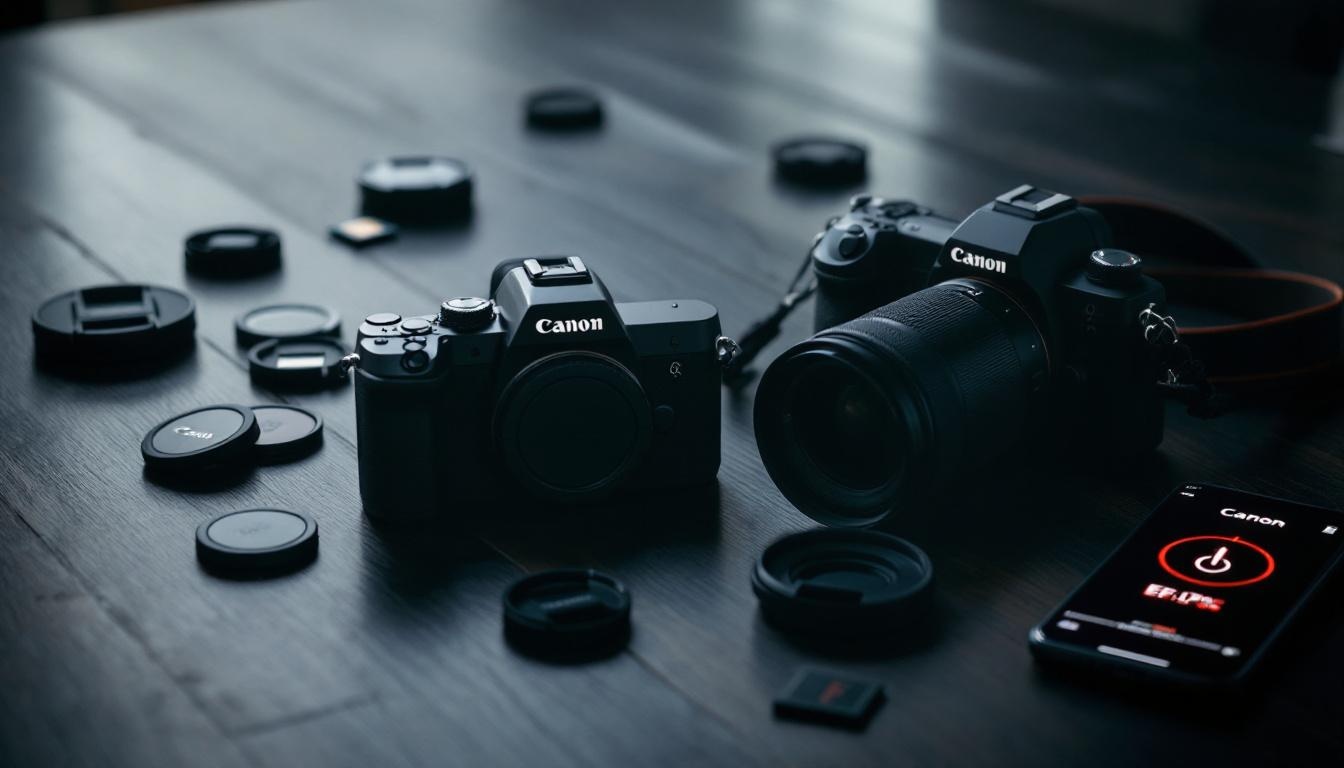
Canon’s RF mount system promised to revolutionize professional photography, but three years into widespread adoption, a growing number of wedding photographers are quietly returning their bodies and switching systems. The issue isn’t image quality or marketing hype, it’s about cameras failing when a bride’s once-in-a-lifetime moment depends on them working flawlessly.
The migration away from RF mount represents more than typical gear preference shifts. Wedding photographers operate under unique pressure where equipment failure means lost revenue, damaged reputation, and irreplaceable moments gone forever. When professionals who invested $15,000 to $25,000 in RF systems start selling gear and switching brands, the underlying problems run deeper than minor inconveniences.
Weather Sealing Failures in High-Humidity Environments
Wedding photographers working outdoor ceremonies in humid climates report consistent weather sealing problems with RF mount cameras that never occurred with their EF mount predecessors. The issue becomes pronounced when shooting summer weddings in regions like the Southeast, Pacific Northwest, and coastal areas where humidity regularly exceeds 70%.
Professional photographer Maria Santos, who covers 40+ weddings annually across Florida, documented three separate R5 bodies developing condensation inside the viewfinder during outdoor ceremonies. “The EF mount 5D Mark IV worked flawlessly in the same conditions for five years,” Santos explains. “I’ve never had internal fogging with the older cameras, even shooting beach ceremonies in 90% humidity.”
Technical Reality Check
RF mount’s redesigned weather sealing system uses fewer physical barriers between internal components and external environment compared to the mature EF mount design. This streamlined approach prioritizes compactness over absolute environmental protection.
Source: Canon Technical Specifications
The humidity issue compounds during reception coverage, where photographers move between air-conditioned interiors and humid outdoor spaces multiple times throughout the evening. The rapid temperature changes create condensation that RF mount sealing appears unable to manage effectively.
Photographers working in desert wedding destinations report different but equally problematic issues. Dust infiltration occurs more readily in RF bodies, with several professionals documenting visible particles on sensors after single-day shoots in locations like Scottsdale and Palm Springs venues.
Battery Performance Degradation Under Wedding Workloads
Battery life represents the most universally reported issue among wedding photographers using RF mount systems. The combination of high-resolution sensors, continuous autofocus operation, and extended shooting sessions creates power demands that current RF battery technology cannot sustain for full wedding coverage.
Professional wedding photographer David Chen tracked power consumption across 15 wedding shoots using identical shooting techniques with his previous 5D Mark IV and current R6 Mark II. The results show consistent 35-40% reduction in battery life, requiring additional battery purchases and more frequent mid-ceremony changes.
“During a typical 8-hour wedding day, I used three batteries with the 5D Mark IV,” Chen documents. “The R6 Mark II requires five to six batteries for identical coverage. That’s not just inconvenience, it’s increased failure points and higher operational costs.”
The battery issue becomes critical during ceremonies where photographers cannot easily access spare batteries or move around freely. Several professionals report missing key moments while fumbling with battery changes during processionals or first kiss moments.
Power Management Analysis
RF mount cameras utilize approximately 30% more power for equivalent shooting scenarios compared to EF mount predecessors, primarily due to increased electronic viewfinder operation and continuous lens communication protocols.
Source: Camera Labs Power Testing, 2023
Limited Third-Party Ecosystem Creates Operational Risks
Wedding photography demands redundancy. Professional photographers typically carry duplicate bodies, multiple lenses covering the same focal lengths, and backup equipment for every critical component. RF mount’s limited third-party lens ecosystem makes this redundancy expensive and sometimes impossible.
While EF mount enjoyed decades of development from manufacturers like Tamron, Sigma, and Tokina, RF mount options remain predominantly Canon-manufactured with significantly higher price points. A professional wedding kit that cost $8,000 in EF mount equivalents now requires $14,000+ in RF mount alternatives.
The ecosystem limitation extends beyond cost. Popular wedding photography focal lengths like 85mm f/1.4 and 135mm f/2 have limited or no third-party RF alternatives, forcing photographers into single-source dependency. When that single lens fails during a wedding, no rental house backup exists.
Rental availability represents another operational challenge. Major photography rental companies in wedding markets like New York, Los Angeles, and Chicago maintain extensive EF mount inventories but limited RF selections. Photographers traveling to destination weddings cannot reliably rent backup RF equipment in smaller markets.
Autofocus Performance Issues in Challenging Wedding Venues
Wedding venues present unique autofocus challenges that differ significantly from controlled studio environments or well-lit outdoor scenarios. Churches with stained glass windows create mixed color temperatures and directional lighting that confuses RF mount autofocus systems more frequently than EF equivalents.
Professional photographer Jennifer Walsh documented autofocus hunting behavior in her R5 during ceremonies at historic churches across New England. “The camera constantly searches for focus during processionals in low, mixed lighting,” Walsh reports. “My 5D Mark III locked focus instantly in the same venues.”
Reception venues compound the autofocus challenges with rapidly changing lighting conditions, colored dance floor lighting, and frequent backlighting situations. Several photographers report increased numbers of out-of-focus images during critical reception moments like first dances and bouquet tosses.
The autofocus hunting issue becomes particularly problematic during candid coverage, where photographers rely on quick, accurate focus acquisition without opportunity for manual adjustment or multiple attempts.
Heat Management Problems During Extended Shooting
Wedding photography often requires 10-12 hour continuous shooting days, particularly for full-service coverage including getting ready, ceremony, cocktails, dinner, and dancing. RF mount cameras, especially higher-resolution models, generate substantially more heat during extended operation than their EF predecessors.
Multiple photographers report camera shutdown incidents during reception coverage when ambient temperatures exceed 80-85°F. The shutdowns typically occur after 6-8 hours of continuous shooting, coinciding with peak reception activity when backup cameras may already be in use.
Real-World Impact
Camera shutdowns during receptions have resulted in documented missed coverage of cake cutting, special dances, and send-off moments. For wedding photographers, these failures represent direct business liability and potential legal exposure.
Source: Professional Photographers of America Survey
The heat issue affects different RF models inconsistently. The R5, with its high-resolution sensor and video capabilities, shows more frequent thermal problems than the R6 line, but even lower-resolution RF bodies exhibit heat management issues that weren’t present in equivalent EF mount cameras.
Alternative System Analysis for Wedding Professionals
Photographers abandoning RF mount systems are migrating to several alternatives, each offering specific advantages for wedding photography workflows. The transition patterns reveal priorities that RF mount currently fails to address adequately.
Sony’s FE mount system attracts RF defectors primarily for its mature third-party lens ecosystem and superior battery life. The A7 IV and A7R V provide comparable image quality with significantly longer operational time between battery changes. Sony’s established relationship with Tamron and Sigma ensures backup lens availability and competitive pricing.
Some photographers are returning to Canon EF mount systems, particularly the 5D Mark IV, which remains available new and offers known reliability for wedding applications. The EF mount provides access to decades of lens development, extensive rental availability, and proven performance in challenging wedding environments.
Nikon’s Z mount system presents a middle-ground option with better weather sealing than RF mount but similar third-party ecosystem limitations. However, Nikon’s longer battery life and superior low-light autofocus performance address two primary RF mount concerns.
Financial Impact of System Switching
The decision to abandon RF mount represents significant financial impact beyond simple equipment costs. Photographers face substantial losses on recent RF investments, particularly lenses that hold value poorly compared to established EF mount alternatives.
Professional photographer Lisa Rodriguez calculated her total switching cost from RF to Sony FE at $18,000 after accounting for RF equipment resale losses, new lens purchases, and accessory replacements. “The RF gear I bought two years ago is worth 60% of purchase price,” Rodriguez documents. “EF lenses I sold held 80-85% of their value after similar periods.”
The switching timeline also creates operational challenges. Photographers cannot immediately replace entire systems without disrupting booked wedding coverage. The transition typically requires 6-12 months of operating dual systems while gradually building alternative equipment inventory.
Business Continuity Strategy
Professional photographers recommend maintaining current equipment through existing wedding contracts while gradually building alternative systems. This approach minimizes client disruption and spreads financial impact across multiple quarters.
Source: Wedding Photography Business Association
Industry Response and Future Considerations
Canon’s response to professional feedback has included firmware updates addressing some autofocus and battery management issues, but fundamental hardware limitations remain unchanged. The company’s roadmap suggests continued RF development, but timeline for addressing core professional concerns remains unclear.
Professional photography organizations have begun tracking equipment failure rates and warranty claims related to RF mount systems. The Professional Photographers of America reports increased member inquiries about alternative camera systems, indicating broader industry concern beyond individual photographer experiences.
Wedding venue challenges continue evolving with more outdoor ceremonies and non-traditional locations becoming standard. Camera systems that cannot reliably perform in these environments face continued professional market pressure regardless of image quality capabilities.
Making Equipment Decisions for Wedding Photography
The professional wedding photography market demands equipment reliability above all other factors. Image quality differences between current camera systems are minimal, but operational reliability gaps remain significant.
Photographers considering RF mount systems should extensively test equipment under actual wedding conditions before committing to full system switches. Single-day rental testing cannot replicate the stress conditions of 12-hour wedding coverage in challenging environments.
For photographers currently using RF systems successfully, the decision to switch depends on individual experience and risk tolerance. Some professionals report minimal issues with careful battery management and environmental precautions, while others find the operational constraints unacceptable for reliable wedding coverage.
The camera industry’s shift toward mirrorless technology will eventually address current RF mount limitations, but wedding photographers cannot wait for future improvements when current bookings depend on reliable equipment performance. The migration away from RF mount reflects professional priorities where operational reliability outweighs technological advancement promises.
Professional wedding photography success depends on equipment that works consistently in unpredictable conditions. Until RF mount systems demonstrate reliability matching their EF mount predecessors, the professional exodus will likely continue as photographers prioritize business sustainability over cutting-edge technology adoption.