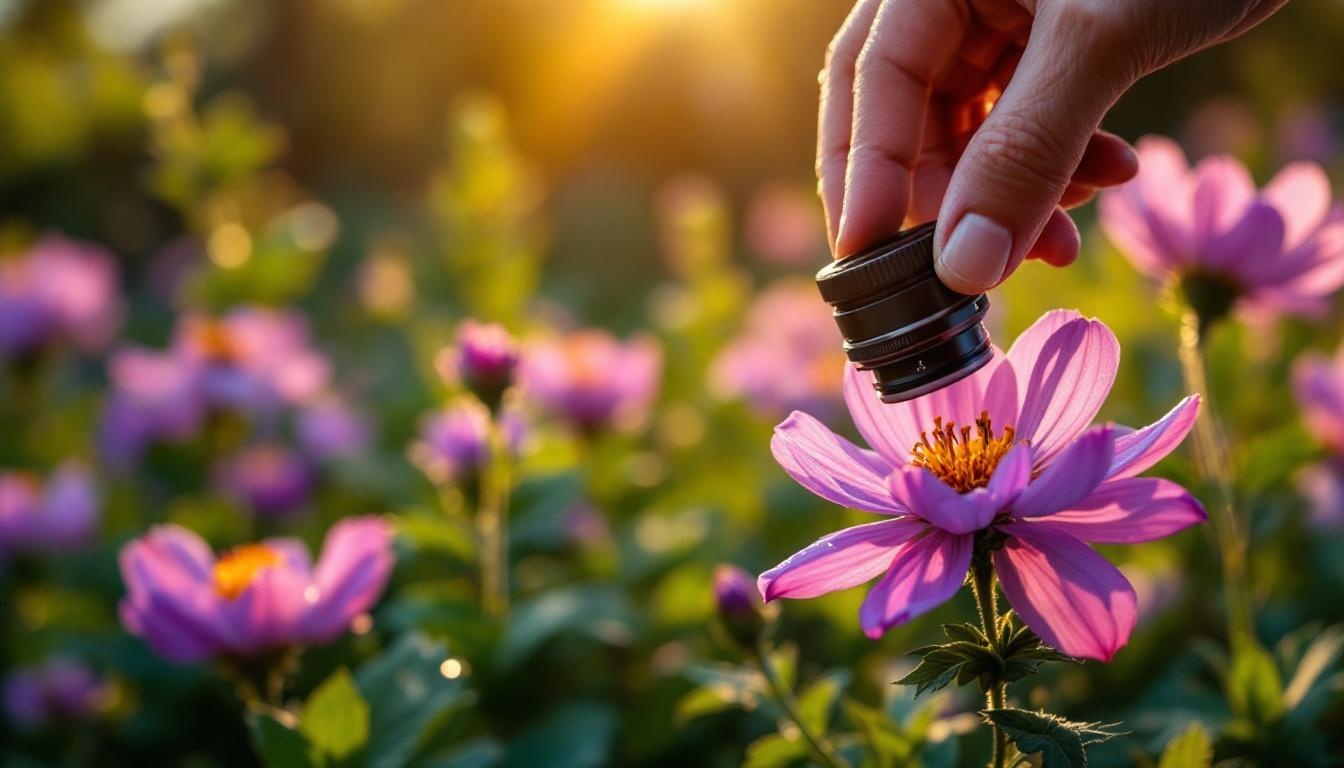
The physics of macro photography present a fundamental challenge: as magnification increases, depth of field shrinks exponentially. At 1:1 magnification with a 100mm macro lens at f/8, your total depth of field measures roughly 0.37mm. This razor-thin plane of focus has sparked an ongoing debate among garden photographers about which technique delivers superior results for capturing the intricate details of flowers, insects, and botanical subjects.
Both focus stacking and hyperfocal distance techniques aim to maximize sharpness, but they operate on entirely different principles and excel in distinct scenarios. Understanding when to deploy each method can mean the difference between a technically mediocre image and one that stops viewers in their tracks.
Understanding the Magnification Threshold
The effectiveness of each technique depends heavily on your magnification ratio. At moderate magnifications (1:4 to 1:2), hyperfocal distance calculations still provide meaningful results. A 100mm macro lens focused at 1:4 magnification offers approximately 2.1mm of depth of field at f/8, enough to capture a small flower head with reasonable front-to-back sharpness when properly positioned.
However, once you cross into true macro territory at 1:1 magnification and beyond, hyperfocal distance becomes mathematically irrelevant. The hyperfocal distance for a 100mm lens at f/8 in macro range often exceeds the physical focusing distance of the lens itself. At these magnifications, focus stacking becomes not just preferable but necessary for any meaningful depth of field.
Environmental Factors That Dictate Technique Choice
Garden photography rarely occurs under ideal studio conditions. Environmental factors often override technical preferences and force practical decisions about which technique will actually work in the field.
Wind presents the greatest challenge for focus stacking. Even slight movement between frames can render a stack unusable. Morning conditions in temperate climates typically offer the calmest air, with wind speeds often below 5 mph before 9 AM. This brief window represents prime focus stacking time, particularly during late spring when many flowering plants reach peak bloom.
Conversely, afternoon shooting sessions when thermal currents increase wind activity favor hyperfocal distance techniques. A butterfly feeding on summer wildflowers won’t wait for perfect conditions, making single-exposure capture essential regardless of the theoretical advantages of stacking.
Lighting conditions also influence technique selection. Focus stacking often requires consistent illumination across multiple frames, making it problematic during rapidly changing light conditions like moving cloud cover. National Park Service botanical documentation emphasizes the importance of stable lighting for scientific plant photography, principles that apply equally to artistic garden work.
The Technical Reality of Diffraction
Hyperfocal distance calculations typically require apertures of f/11, f/16, or smaller to achieve maximum depth of field. However, diffraction begins degrading image quality on most modern cameras by f/11, with significant softening apparent at f/16 and beyond.
This creates a fundamental contradiction: the apertures required for hyperfocal distance effectiveness often produce softer images than focus stacking at optimal apertures like f/5.6 or f/8. The Cambridge University microscopy research demonstrates that diffraction-limited resolution becomes the primary limiting factor in close-up photography at small apertures.
Focus stacking sidesteps this limitation entirely by allowing photographers to work at the lens’s sweet spot for sharpness while building depth of field through multiple captures rather than physics-defying aperture settings.
Practical Field Applications
Understanding the theoretical advantages means little without practical application guidelines. Consider these real-world scenarios that favor each technique:
Focus stacking excels when: Photographing detailed flower structures like orchid centers, capturing intricate insect anatomy on stationary subjects, documenting seed pod textures, or creating exhibition-quality botanical portraits where maximum technical quality is paramount.
Hyperfocal distance works best for: Active pollinator photography, wider garden scenes incorporating foreground flowers and background plantings, windy conditions where subject movement is inevitable, or situations requiring rapid shooting without post-processing time.
Magnification-Based Decision Matrix
At 1:4 to 1:3 magnification: Hyperfocal distance provides adequate results with single exposures. At 1:2 magnification: Focus stacking begins showing clear advantages. At 1:1 magnification and beyond: Focus stacking becomes essentially mandatory for front-to-back sharpness.
Equipment Considerations and Workflow Impact
The choice between techniques affects equipment selection and field workflow significantly. Focus stacking requires rock-solid tripod support, often benefiting from additional weight or guy wires in garden environments. A macro focusing rail provides precise focus adjustments, while electronic releases eliminate vibration during capture sequences.
Hyperfocal distance shooting allows greater mobility and spontaneity but demands accurate distance measurement tools and reliable depth of field calculations. Many photographers create reference cards with hyperfocal distances pre-calculated for their favorite macro lenses at common apertures and magnifications.
Post-processing workflows differ dramatically between techniques. Focus stacking requires specialized software like Helicon Focus or Photoshop’s auto-blend layers function, plus significant computer processing time for complex stacks. Hyperfocal distance images require only standard RAW processing, allowing immediate review and delivery of finished images.
Seasonal and Geographic Considerations
Geographic location and seasonal timing influence technique selection through their effects on weather patterns, subject availability, and lighting conditions. Northern latitude photographers working during late autumn face shorter golden hours and more frequent wind, favoring quick hyperfocal distance captures over extended focus stacking sessions.
Desert garden photography during summer months presents heat shimmer problems that can disrupt focus stacking sequences, while the generally calmer air conditions favor hyperfocal distance work. Coastal photographers must contend with marine layer effects and salt spray that can impact equipment during longer shooting sequences.
Spring wildflower photography in mountainous regions often occurs during periods of variable weather, making the flexibility of hyperfocal distance techniques valuable when conditions change rapidly during shooting sessions.
Common Technical Pitfalls
Many photographers make critical errors when implementing either technique, leading to suboptimal results that discourage further experimentation. Focus stacking failures often result from inadequate overlap between focus points, insufficient depth of field in individual frames, or movement between captures that creates alignment problems.
Hyperfocal distance miscalculations typically stem from using full-frame calculations with crop sensor cameras, forgetting to account for magnification effects on effective focal length, or failing to consider the near focus limit when calculating optimal focus distances.
Understanding these failure modes helps photographers avoid common traps and achieve more consistent results regardless of chosen technique.
The Verdict
Neither focus stacking nor hyperfocal distance represents a universally superior approach to macro garden photography. Success depends on matching technique to magnification ratio, environmental conditions, and creative goals. Master photographers develop proficiency in both methods, switching fluidly based on field conditions and subject requirements. The key lies not in choosing a single technique but in building the technical knowledge and practical experience to deploy the right tool for each specific shooting situation.