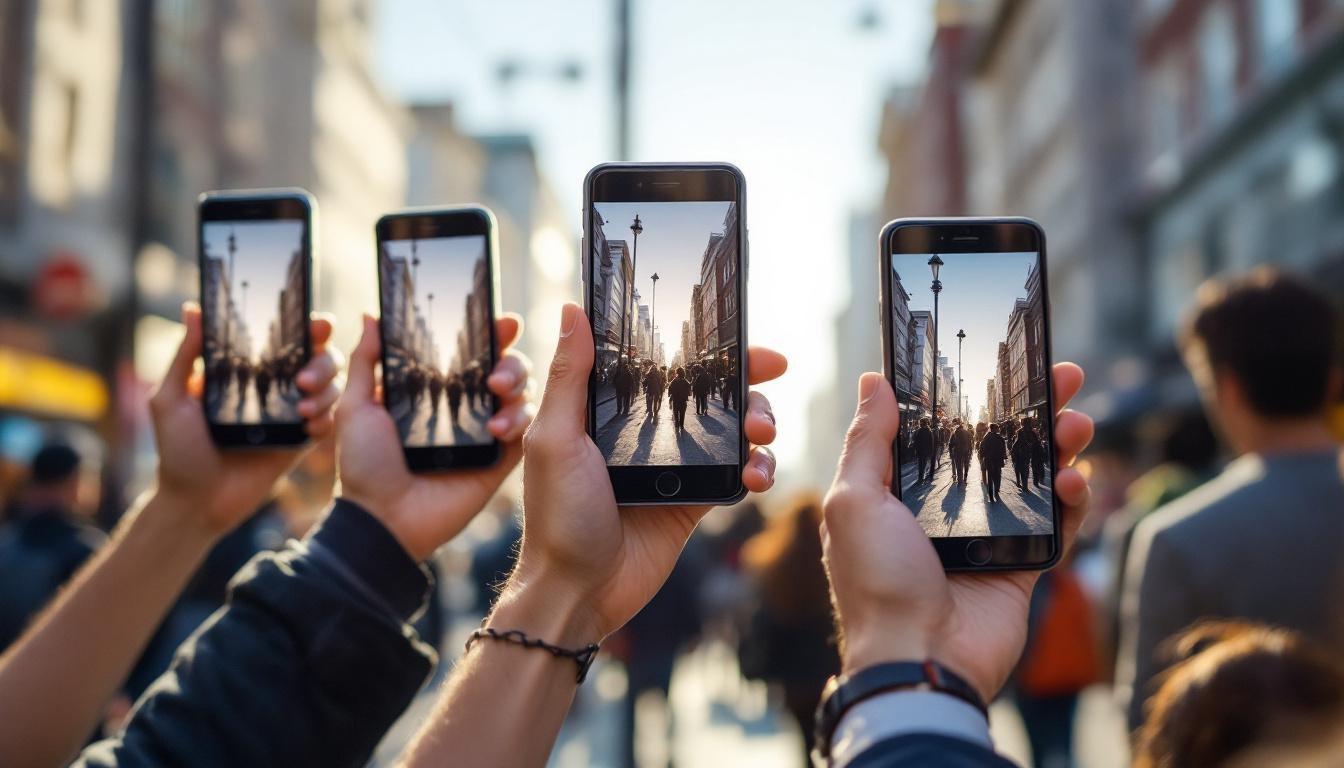
The moment a smartphone appeared in every pocket, street photography entered uncharted ethical territory. While photographers have always wrestled with questions of consent and privacy, the ubiquity of surveillance technology has fundamentally altered public expectations about being photographed, creating a complex landscape where legal rights and moral responsibilities often diverge.
For documentary photographers, this shift demands a complete reconsideration of established practices. The casual anonymity that once allowed photographers to blend into crowds and capture genuine moments now competes with heightened awareness of surveillance and privacy. Every person on the street has become both a potential subject and a photographer themselves, changing the power dynamics that have traditionally defined street photography.
The Legal Foundation: Understanding Your Rights
In most Western countries, photographing in public spaces remains legally protected, but the specifics vary dramatically by jurisdiction. In the United States, the First Amendment generally protects photography in public areas, with courts consistently ruling that people have no expectation of privacy when visible from public spaces.
However, this broad protection comes with important nuances. The National Press Photographers Association notes that while taking photographs is protected, the commercial use of those images may require model releases, particularly if identifiable individuals are the primary focus.
European photographers face a more complex landscape. Germany’s “Recht am eigenen Bild” (right to one’s own image) requires permission before photographing recognizable individuals, even in public spaces. This law, rooted in post-war privacy protections, makes traditional street photography practices legally problematic without explicit consent.
The European Union’s General Data Protection Regulation (GDPR) adds another layer of complexity. While artistic expression receives some protection, the regulation’s broad definition of personal data can include photographs of identifiable individuals, potentially requiring consent for processing and publication.
Understanding these legal frameworks provides the foundation for ethical decision-making, but law and ethics operate on different planes. What’s legally permissible may still be ethically questionable, particularly when photographing vulnerable populations or in culturally sensitive contexts.
The Smartphone Surveillance Effect
The proliferation of smartphone cameras has created what surveillance studies scholars call “participatory panopticon” (a concept developed at the University of California, Berkeley). Everyone now carries the capability to document and broadcast, fundamentally altering social expectations around privacy and consent.
This shift manifests in several ways that directly impact street photographers. First, subjects are more likely to notice cameras and react to them. The reflexive gesture of raising a hand to block a lens or turning away has become increasingly common, even when photographers are working discretely with traditional equipment.
Second, the social understanding of photography has broadened. Where once a person with a large camera was clearly identified as “a photographer,” the line between casual documentation and serious photographic work has blurred. This ambiguity can work both for and against documentary photographers, depending on the context.
Third, the immediate publication potential of smartphone photography has heightened concerns about how images might be used. Subjects increasingly worry not just about being photographed, but about where those images might end up and how they might be contextualized.
Consent Strategies: Beyond Simple Permission
The traditional photography consent model (ask permission or shoot without it) no longer adequately addresses the ethical complexities of contemporary street photography. Modern practitioners are developing more nuanced approaches that balance authentic documentation with respect for subject agency.
Implied consent represents one middle path. This approach involves making your photographic intent clear through visible equipment, professional behavior, and openness to questions, while reading social cues to determine when subjects are comfortable with being photographed. A photographer working openly in a public market, for example, allows people to avoid or approach them based on their comfort level.
Progressive disclosure offers another strategy. Rather than seeking explicit verbal consent before shooting, photographers capture moments naturally, then approach subjects afterward to explain the project and request permission for use. This method preserves spontaneity while still prioritizing subject autonomy.
For documentary projects with clear social value, some photographers employ a hybrid approach: shooting first to capture authentic moments, then conducting follow-up interviews or community presentations to build relationships and secure proper consent for publication.
The key insight here challenges a persistent myth in street photography: that authentic moments can only be captured without the subject’s awareness. Many of the most powerful documentary photographs in history were taken with subject cooperation and consent, demonstrating that ethical practice and photographic excellence are not mutually exclusive.
Cultural Context and Power Dynamics
Ethical street photography requires deep consideration of cultural context and power relationships between photographer and subject. These dynamics become particularly complex when documenting communities different from one’s own, whether defined by economics, race, religion, or other factors.
Economic disparities present one of the most common ethical challenges. A photographer with expensive equipment documenting homeless individuals or working-class communities operates within inherent power imbalances that affect both the ethics of image-making and the authenticity of resulting photographs.
Tourist photography represents a specific subset of these concerns. The ease of travel and photography has created situations where visitors briefly document local communities without understanding cultural norms around image-making or consent. What seems like harmless documentation to a photographer may feel exploitative or invasive to subjects.
Religious and cultural sensitivities add another layer of complexity. Some communities have specific beliefs about photography and image-making that visitors may not understand. Respectful documentary work requires research and often direct community engagement before photography begins.
The solution lies not in avoiding these subjects, but in approaching them with humility, research, and genuine interest in community perspectives. Documentary photography at its best creates understanding across differences, but this goal requires photographers to examine their own positions and motivations honestly.
Documentary Intent and Ethical Justification
The purpose and context of photographic work significantly affects its ethical standing. A snapshot for social media operates under different ethical standards than documentary work intended to illuminate social issues or preserve cultural moments.
Serious documentary projects often justify more complex consent negotiations because of their potential social value. A photographer documenting climate change impacts, social inequality, or cultural traditions can argue that the public benefit of the work outweighs individual privacy concerns, provided the work is conducted respectfully and subjects are fairly represented.
However, this justification requires genuine commitment to the documentary purpose. Claiming social value for work that’s primarily commercial or self-promotional represents a form of ethical bad faith that undermines the entire framework.
The presentation and distribution context also matters ethically. Images published in established media outlets with editorial standards operate under different ethical assumptions than those shared on social media or sold as fine art prints.
Practical Guidelines for Ethical Practice
Developing an ethical framework for contemporary street photography requires balancing multiple considerations: legal requirements, cultural sensitivity, subject autonomy, and documentary value. Rather than rigid rules, photographers need flexible principles that can adapt to specific situations.
First, understand the legal landscape where you work. This means not just national laws, but local regulations and cultural norms. What’s acceptable in New York City may be inappropriate in a small German town or Tokyo neighborhood.
Second, make your intent clear when possible. Professional behavior, visible equipment, and openness to questions allow subjects to make informed decisions about participation. Stealth photography should be reserved for situations where disclosure would genuinely compromise important documentary goals.
Third, consider power dynamics and vulnerability. Children, homeless individuals, people in crisis, and members of marginalized communities deserve additional ethical consideration, often requiring explicit consent regardless of legal requirements.
Fourth, think beyond the moment of capture. How will images be used, stored, and distributed? What safeguards exist to prevent misuse or miscontextualization? These questions become particularly important when photographing sensitive subjects or situations.
Finally, maintain ongoing education about ethics, law, and cultural sensitivity. The landscape continues evolving as technology advances and social norms shift. What seemed acceptable five years ago may be questionable today.
Building Trust in Surveillance Culture
Perhaps the most significant challenge facing contemporary street photographers is building trust in an environment of generalized surveillance anxiety. People increasingly assume that being photographed means being monitored, catalogued, or commodified in some way.
Counteracting this assumption requires transparency, professionalism, and genuine respect for subject agency. Photographers who work openly, explain their projects clearly, and follow through on promises about image use build the kind of community trust that makes authentic documentary work possible.
Professional organizations like The Royal Photographic Society have developed ethical guidelines that emphasize respect, honesty, and social responsibility. These frameworks provide starting points for individual ethical development, though they cannot substitute for personal reflection and community engagement.
The most successful contemporary street photographers often spend considerable time in communities before beginning serious photography, building relationships and understanding local concerns. This investment in human connection yields both better photographs and more ethical practice.
Technology may also provide partial solutions. Emerging tools for consent management, secure storage, and subject notification could help photographers navigate ethical challenges while maintaining documentary authenticity.
The Future of Ethical Street Photography
As surveillance technology continues advancing and privacy concerns intensify, street photography will likely undergo further evolution. Facial recognition, artificial intelligence, and biometric data collection raise new questions about consent, privacy, and the permanence of photographic documentation.
Rather than retreating from these challenges, the photography community needs proactive engagement with ethical questions. This means participating in policy discussions, developing new consent technologies, and maintaining dialogue with communities being documented.
The core values of documentary photography (truth-telling, social awareness, cultural preservation) remain vital in an interconnected world facing complex challenges. However, achieving these goals requires constant evolution in methods and ethics.
- Legal permission and ethical responsibility operate on different levels; what’s legal may still be ethically problematic
- Smartphone surveillance culture has fundamentally changed public expectations around privacy and consent
- Building genuine relationships with subjects often produces better photographs than covert shooting
- Consider power dynamics, cultural context, and vulnerable populations when making ethical decisions
- Documentary intent and social value affect ethical calculations, but require genuine commitment to public benefit
- Transparency and professionalism help build community trust in an environment of surveillance anxiety