
Every intermediate photographer faces the same creative crisis: your images are technically perfect and compositionally sound, yet they feel sterile and forgettable. You’ve mastered the rule of thirds, leading lines, and depth of field, but your work looks identical to thousands of other photographers. The problem isn’t your technical skills. The problem is that you’re following rules without understanding when to break them.
The Compositional Safety Net Is Strangling Your Creativity
The rule of thirds has become photography’s training wheels, and most photographers never take them off. I see this constantly in portfolio reviews: image after image with subjects dutifully placed on intersection points, horizons locked to the lower third line, and leading lines drawing the eye exactly where you’d expect. These compositions work, technically, but they don’t surprise anyone.
The strongest argument for sticking to established rules is that they provide reliable results. Amateur photographers who place subjects on third-lines consistently produce more balanced compositions than those who center everything. That’s not wrong. But here’s the critical distinction: rules like the rule of thirds exist to solve specific visual problems (creating balance, avoiding static compositions, guiding the eye). Once you understand the underlying problem each rule solves, you can solve that same problem in ways no one expects.
The rule of thirds is just a starting point, not a destination. I tell my students that once they can compose using the rule instinctively, they need to start breaking it intentionally to develop their own visual voice.
Consider storm photography during winter conditions. Traditional landscape rules suggest placing the horizon on the lower third to emphasize dramatic skies. But what happens when you flip that expectation? Placing a stormy sky in the bottom third of your frame, with snow-covered ground dominating the upper two-thirds, creates visual tension that makes viewers pause. They expect the dramatic element (the storm) to occupy the dominant portion of the frame. When it doesn’t, they look longer, trying to understand why the composition feels unsettling yet compelling.
Some of my most compelling winter storm images completely violate traditional landscape composition. When you place the dramatic elements where viewers don’t expect them, you force them to really look at the image instead of just glancing and moving on.
Systematic Creative Rebellion: A Framework for Intentional Rule-Breaking
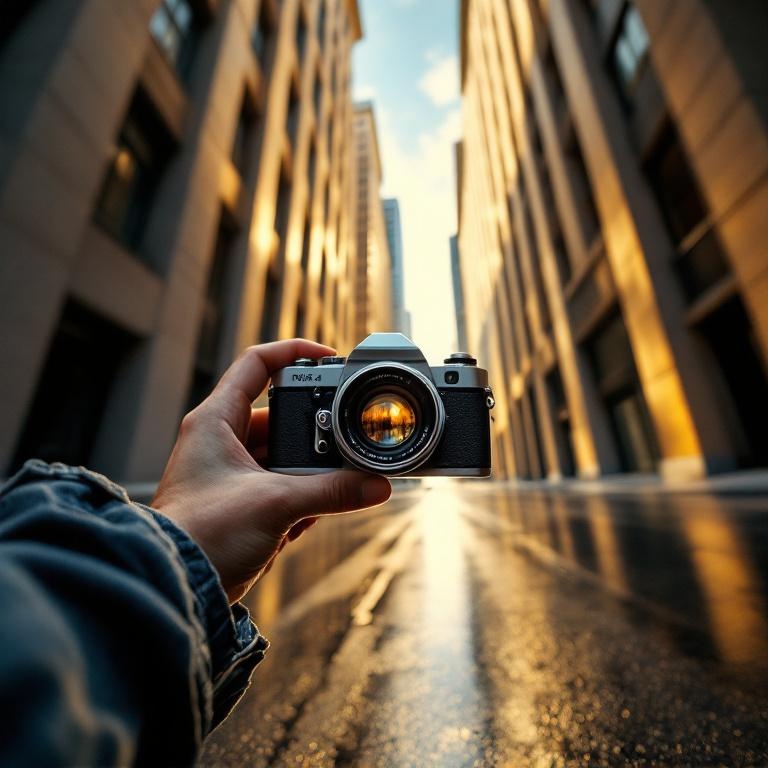
Waiting for inspiration is the amateur’s approach to creativity. Professional photographers who consistently produce distinctive work follow systematic methods for generating fresh ideas, even under pressure. The key is developing what I call “systematic creative rebellion”: a structured approach to breaking compositional conventions.
Start with constraint-based creativity exercises. Choose one compositional rule you rely on heavily, then spend an entire shooting session deliberately violating it. If you always use leading lines to guide the eye toward your subject, shoot a series where lines lead away from the subject or create visual barriers that block the obvious path to your focal point. This isn’t about creating chaos for its own sake. You’re training yourself to see alternative solutions to the same visual problems.
Urban photography offers perfect examples of this approach. Most city photographers use architectural lines to create order and structure in their compositions. But during permit-restricted street photography sessions (when you can’t control positioning or timing), try using those same architectural elements to create visual conflict instead. Photograph people walking against the flow of architectural lines, or position subjects where building geometry creates uncomfortable negative space around them. The resulting tension often communicates the urban experience more authentically than perfectly balanced compositions.
Environmental Constraints as Creative Catalysts
The photography community has this backwards: most photographers see challenging conditions as obstacles to overcome rather than opportunities to innovate. Bad weather, difficult lighting, and restricted access don’t limit creativity. They force it.
I learned this during a commercial shoot in downtown areas with strict photography regulations. Standard portrait compositions were impossible due to space restrictions and foot traffic patterns. Instead of fighting these constraints, I used them. The cramped space forced me to work with extreme close-ups and unusual angles. The constant movement of pedestrians meant I had to capture expressions in micro-moments between distractions. The resulting portraits had an urgency and intimacy that wouldn’t have existed in a controlled studio environment.
Seasonal lighting challenges work the same way. During winter months when golden hour light is scarce and harsh midday sun reflects off snow, most photographers stop shooting outdoors. But these conditions create opportunities for high-contrast compositions that would be impossible in perfect light. The key is shifting your creative goals to match environmental realities rather than fighting them.
The Emotional Architecture of Memorable Images

Technical precision without emotional intent produces forgettable photographs, no matter how perfectly composed they are. The photographers whose work stands out consistently combine technical excellence with clear emotional storytelling goals. But here’s what most photography education gets wrong: emotion in photography isn’t about capturing dramatic moments. It’s about creating visual experiences that make viewers feel something specific before they intellectually process what they’re seeing.
This requires what psychologists call “emotional pre-loading”: structuring your composition so that viewers experience a specific emotional response before they identify your subject. Research from art psychology studies shows that viewers form emotional responses to images within 100 milliseconds of seeing them, long before conscious recognition occurs. According to the American Psychological Association this rapid emotional processing is based entirely on visual patterns, color relationships, and compositional structure, not subject matter.
Apply this to portrait photography: instead of focusing on capturing the perfect expression, structure your composition to create the emotional state you want viewers to experience. Tight framing with minimal negative space creates intimacy and intensity. Excessive negative space around a small figure generates feelings of isolation or vulnerability. The subject’s actual expression becomes secondary to the emotional architecture you’ve built around them.
Learning from Failure: Why Your Worst Shots Are Your Best Teachers
Most photographers delete their failed shots immediately, which eliminates their most valuable learning opportunities. The images that don’t work contain more useful information about your creative process than your successes do. Your successful shots reinforce what you already know. Your failures reveal the boundaries of your current understanding.
Start keeping a “failure file” of images that didn’t work as intended. After a month, analyze the patterns. Are you consistently failing in the same ways? Do your unsuccessful experiments cluster around specific techniques or subjects? These patterns reveal exactly where your creative growth opportunities lie.
During landscape photography sessions in challenging weather conditions, I found that my failures consistently involved trying to impose ideal compositions on non-ideal conditions. I was attempting to create golden-hour lighting effects during overcast days, trying to force dramatic foreground elements into scenes that called for simplicity. The failures taught me to recognize when environmental conditions were asking for completely different compositional approaches. This shift in perspective led to some of my most distinctive work.
Building Your Personal Creative Methodology
Developing a distinctive photographic voice isn’t about finding your “style” and sticking to it forever. It’s about building a personal methodology for generating fresh creative solutions to visual problems. This methodology should be systematic enough to produce consistent results but flexible enough to evolve with your growth as a photographer.
Document your creative decision-making process. After each shooting session, note not just what worked, but why you made specific compositional choices. Were you solving a technical problem? Pursuing an emotional goal? Experimenting with a new approach? Over time, these notes reveal patterns in your creative thinking that you can intentionally develop and refine.
Professional photography organizations like the Professional Photographers of America emphasize this systematic approach to creative development in their advanced certification programs. The photographers who advance from technically competent to creatively distinctive are those who treat creativity as a learnable skill set rather than a mystical inspiration.
The Commercial Reality of Creative Risk-Taking
The tension between creative experimentation and commercial viability is real, but it’s not the career-limiting factor most photographers believe it to be. Clients don’t hire photographers for their ability to follow established conventions. They hire photographers whose work stands out from everyone else’s. The key is learning to take calculated creative risks that differentiate your work without alienating your market.
Start by identifying which aspects of your work can afford to be experimental and which need to remain commercially reliable. If you’re shooting corporate headshots, the final delivered images need to meet specific professional standards. But your approach to lighting, posing, and environmental integration can be highly innovative within those constraints. The creativity lies in solving standard commercial problems in unexpected ways.
Cultural events and local traditions provide perfect opportunities to develop this balance. Every photographer covering the same festival or celebration faces identical challenges: crowds, variable lighting, predictable moments. The photographers whose work gets noticed are those who find fresh perspectives on familiar subjects. This requires creative problem-solving skills that directly transfer to commercial work.
- Master compositional rules first, then break them systematically to solve visual problems in unexpected ways
- Use environmental constraints and challenging conditions as creative catalysts rather than obstacles to overcome
- Structure compositions to create specific emotional responses before viewers consciously process subject matter
- Analyze failed shots to identify creative growth opportunities and patterns in your decision-making process
- Develop a personal methodology for generating creative solutions that works consistently under commercial pressure